Built In Place: Architectural and community-led
models for regional infill and medium density | Victorian Regional Symposium 2025
ON-DEMAND CPD: 1 Formal CPD Point
Overview
See how density is already being delivered in regional Victoria through small, smart, and locally led projects. This session showcases successful architectural and planning responses to housing challenges, led by practitioners deeply embedded in their communities. This standalone CPD session is a recording from the in-person Victorian Regional Symposium 2025.
This session includes three presentations:
Beyond the Building
Rosella Sciurti (Architect Cumulus Studio)
This presentation explores the Goulburn Street Social Housing project in Hobart, a design-led response to the question of how social housing can foster dignity, community, and connection all while sensitively responding to its heritage context.
Patterns and Models for Suburban Density
Matt Delroy-Carr (Principal, MDC Architects)
Matt is passionate about how architectural practice can deliver housing at scale across a wide range of typologies, while balancing the challenges of construction costs, planning requirements, and the financial realities of home ownership. In this session, he will share insights from recent MDC Architects projects, highlighting how the practice adapts its approach to different housing models, the benefits of construction standardisation, and why embedding sustainable design from the outset is key to creating resilient and enduring homes.
Bluefield Housing: Co-located infill for the suburbs
Damian Madigan (Associate Professor, University of South Australia)
Damian will be presenting his Bluefield Housing infill model, which has just been legislated in South Australia as a new Land Use Definition called Co-located Housing. It allows additional housing on a single block with no minimum lot size and no maximum dwelling numbers. The kicker is that the title gets transferred to a Community (ie: strata) Title, that the original house has to be incorporated into the development via adaptive reuse, and the dwellings need to share a high-amenity garden. The new housing can be added as any combination of a division of the original house and/or an extension to it, and/or the addition of a detached backyard home.
A short Q&A session follows with the speakers. Panel moderator: Lucia Amies (Associate Editor, Architecture Media)
NSCA 2021 Performance Criteria
- PC16: Understand risk management and mitigation principles and strategies – including safety in design, project risk, requirement for resilience from the impacts of climate change and appropriate insurances – across architectural services.
- PC18: Be able to apply creative imagination, design precedents, research, emergent knowledge and critical evaluation in formulating and refining concept design options, including the exploration of three dimensional form and spatial quality.
- PC21: Be able to apply project budgets, or work with quantity surveyor to establish project budgets, based upon understanding of cost planning, value management and factors influencing project cost relevant to the project type and scale.
- PC29: Be able to develop and evaluate design options in terms of the heritage, cultural and community values embodied in the site, and in relation to project requirements.
- PC32: Be able to apply planning principles and statutory planning requirements to the site and conceptual design of the project.
- PC35: Understand the operational and embodied carbon implications of chosen materials, components and systems.
- PC46: Understand the processes for producing project documentation that meets the requirements of the contract and procurement procedure and complies with regulatory controls, building standards, codes, and conditions of construction and planning approvals.
Learning Outcomes
At the end of this session, participants should be able to:
- Apply planning principles and statutory planning requirements to the site and conceptual design of the project.
- Understand the processes for producing project documentation that meets the requirements of the contract and procurement procedure and complies with regulatory controls, building standards, codes, and conditions of construction and planning approvals.
- Apply creative imagination, design precedents, research, emergent knowledge and critical evaluation in formulating and refining concept design options, including the exploration of three dimensional form and spatial quality.
- Apply project budgets, or work with quantity surveyor to establish project budgets, based upon understanding of cost planning, value management and factors influencing project cost relevant to the project type and scale.
- Understand risk management and mitigation principles and strategies – including safety in design, project risk, requirement for resilience from the impacts of climate change and appropriate insurances – across architectural services.
- Develop and evaluate design options in terms of the heritage, cultural and community values embodied in the site, and in relation to project requirements.
- Understand the operational and embodied carbon implications of chosen materials, components and systems.
- Integrate community, social and ethical considerations in the formulation of design concepts and strategies.
Speakers

Rosella Sciurti
Architect, Cumulus Studio
Rosella is an experienced architect at Cumulus Studio, based in Naarm/Melbourne. She works on medium to high-density residential, commercial, and public projects. Early exposure to large-scale, community-oriented projects helped shape her appreciation for architecture that not only functions well but also inspires and engages. She is particularly drawn to concept design, where the foundation of a project is laid through narrative, context, and creative vision.

Matt Delroy-Carr
Principal, MDC Architects
Matt Delroy-Carr is the principal of MDC Architects, a practice founded to fulfil a vision to make sustainable architecture more affordable for more people. Matt established MDC Architects as a platform to research and advocate for an improved status quo in the quality of our housing, with particular focus on the affordable and sustainable, including single homes and multi-residential developments. Matt’s interests extend to the development of good planning policy to inform the evolution of our urban environments.
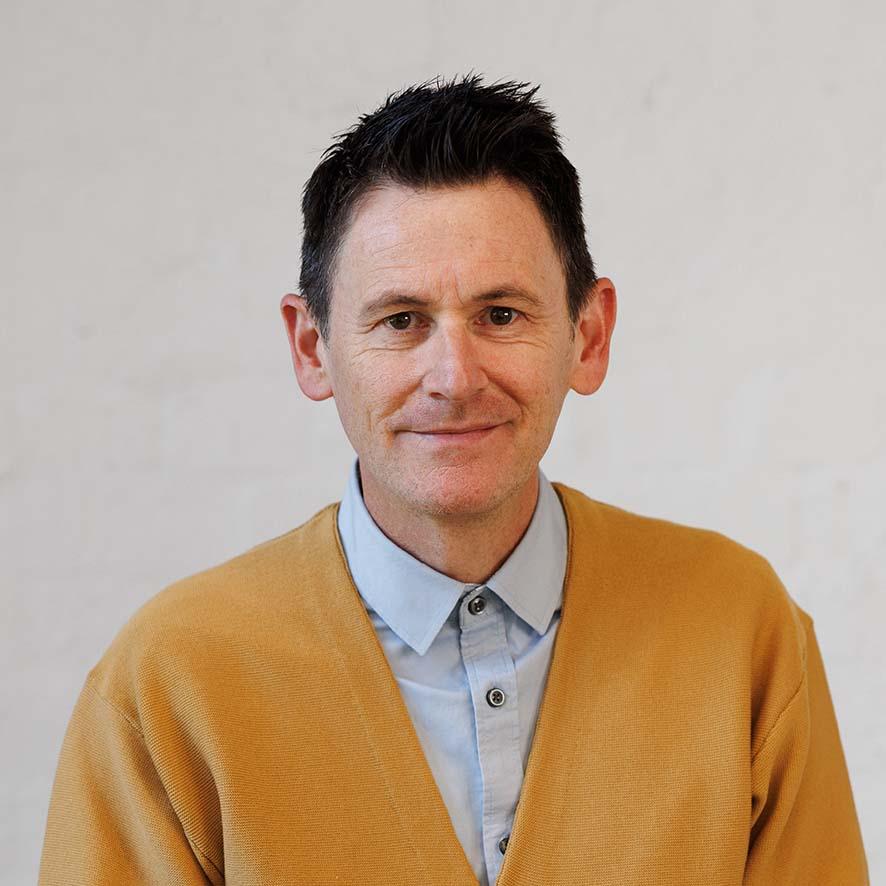
Damian Madigan
Associate Professor, University of South Australia
Damian is the creator of ‘Bluefield Housing’ – a re-definition of established suburbs and an accompanying adaptive reuse infill model. In May, ‘Co-located Housing’ became a new Land Use Definition and permitted form of infill in South Australia; the first time in Australia a new housing model has been legislated through a bottom-up design-led process.
Price
Members: $79
Student members: FREE
Non-Members: $149
FAQs
What do I do next?
- You will receive an automated registration email upon purchase. Follow the link in this email to take you to the course.
- Accept the T&Cs if it is your first time on the online platform and hit “my dashboard” to find your purchased course.
Cancellations and refunds
Generally, the Institute will not agree to a refund if the request is received less than 14 days before the event starts, unless otherwise stated in the cancellations and refunds policy.