Ground Matters: Andrew Steen, Collaboratorio- ON DEMAND
On Demand
1 Formal CPD Point
Overview
In this lecture from the Ground Matters Student Conference 2024, Andrew Steen interrogates the relation of building materials to the history, present, and future of a place – specifically, bricks and bluestone to Launceston, lutruwita (Tasmania). Conventional perspectives on tradition and ideologies based on western philosophies and academic scaffolds will be interrogated, and new grounds for practice sketched out.
Christina and Martino of Collaboratorio, discuss their environmentally conscious architecture using traditional materials. In their talk they go back to basics ,reintroducing traditional building materials to serve contemporary needs. Focusing on minimally processed, natural resources like unburned clay, developing "Luonnonbetoni," a sustainable concrete alternative.
Further resources are also available from the First Nations Resources Hub, The Institute's dedicated platform for built environment professionals seeking to deepen their understanding and practice of culturally respectful and appropriate design for First Nations peoples
Learning Outcomes
On completion of this course participants should be able to:
- Discuss the relations building materials have between forming connections to place both historically and into the future.
- Explain possible new trajectories of practice stemming from tradition and ideologies based on western philosophies and academic scaffolds.
- Discuss the use of traditional building materials and their benefits to creating more sustainable buildings
- Discuss the benefits of working collaboratively with different consultants and organisations during the design and procurement processes.
- Describe the use of Luonnonbetoni in Collaboratorio’s work and its benefits.
- Articulate ways that architectural practice and design can promote the repair of and support for ecological environments.
2021 NSCA Performance Criteria
PRACTICE MANAGEMENT AND PROFESSIONAL CONDUCT
PC10 Understand the whole life carbon implications of procurement methods, materials, components and construction systems.
PROJECT INITIATION AND CONCEPTUAL DESIGN
PC17 Have an understanding of Aboriginal and Torres Strait Islander Peoples’ aspirations to care for Country and how these inform architectural design.
PC18 Be able to apply creative imagination, design precedents, research, emergent knowledge and critical evaluation in formulating and refining concept design options, including the exploration of three dimensional form and spatial quality.
PC25 Be able to draw on knowledge from the history and theory of architecture as part of preliminary design research and when developing the conceptual design.
PC26 Be able to undertake site, cultural and contextual analysis as part of preliminary design research.
PC27 Understand how to embed the knowledge, worldviews and perspectives of Aboriginal and Torres Strait Islander Peoples, shared through engagement processes, into the conceptual design in a meaningful, respectful and appropriate way.
PC28 Be able to draw on knowledge from building sciences and technology, environmental sciences and behavioural and social sciences as part of preliminary design research and when developing the conceptual design to optimise the performance of the project.
PC29 Be able to develop and evaluate design options in terms of the heritage, cultural and community values embodied in the site, and in relation to project requirements.
PC30 Be able to explore options for siting a project, including integrating information and analysis of relevant cultural, social and economic factors.
PC31 Be able to identify, analyse and integrate information relevant to environmental sustainability – such as energy and water consumption, resources depletion, waste, embodied carbon and carbon emissions – over the lifecycle of a project.
PC33 Be able to investigate, coordinate and integrate sustainable environmental systems – including water, thermal, lighting and acoustics – into the conceptual design.
Speakers

ANDREW STEEN
Dr Andrew Steen is a lecturer at the University of Tasmania School of Architecture and Design and coordinator of the Bachelor of Architecture and Built Environment course. Andrew’s research encompasses theoretical and critical investigations of architectural discourse from semiology and poetics to heritage and place. Andrew Steen is a thoughtful and prolific educator, overseeing multiple design studios that encourage students to think critically about the social, cultural, environmental and poetic impacts their designs may have on the landscape and people that inhabit them. Andrew recently ran a three-tiered studio in conjunction with Taylor + Hinds Architects which saw students travel to Queenstown, lutruwita to critically engage with the ground-scape in order to develop architectural responses.
COLLABORATORIO
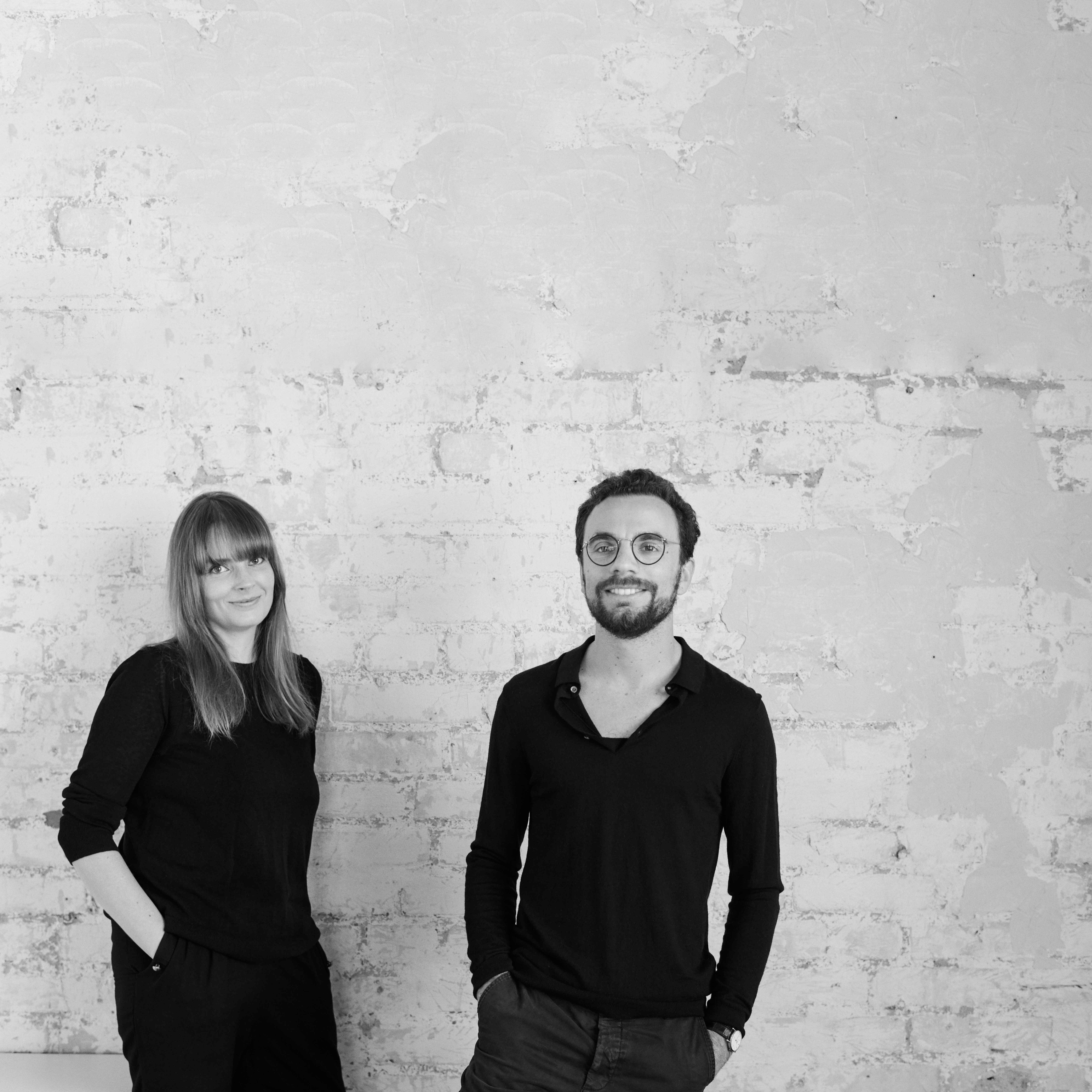
Based in Helsinki, Kristiina Kuusiluoma and Martino De Rossi founded Collaboratorio in 2016 to create an architecture practice that is centered around collaboration. This collaboration exists, not just between the clients, architects and contractors, but between multiple disciplines of knowledge including science and art, depending on the project. Collaboratorio are committed to delivering projects that utilize natural and ecologically positive materials to strengthen the well-being of not only the client, but the natural landscape and thus the ground. Currently undertaking work with Luonnonbetoni, Collaboratorio are part of an endeavor to bring a sustainable concrete alternative, using stone and clay, to the forefront of architectural design. This endeavor is evident in the Villa Koppar project and will be used in more of their projects in the future.
Price
Members $49
Non Members $74