Ground Matters: Kerstin Thompson, Timothy Hill- ON DEMAND
On Demand
1 Formal CPD Point
Overview
In this lecture from Ground Matters Student Conference 2024, Kerstin Thompson discusses how ground matters have been foundational to KTA’s practice. The ways in which our architecture critically relates to Australia’s diverse landscapes - and to disciplinary, theoretical and historical groundings - will be explored in Kerstin’s reflection upon a number of projects.
Timothy Hill speaks on architecture's profound ability to evoke powerful responses. It can heighten our awareness of the intrinsic aspects of habitation and the landscape. Creating an appropriate 'ground' for occupation is crucial, reshaping the site's boundaries and topography to enrich the experience and mitigate any surrounding challenges. This approach can include crafting miniaturized landscapes and urban elements, tapping into collective memories and associations. By prioritising emotional resonance, spaces become memorable and enduring, sustaining qualities over time such as light, weather response, and spatial dynamics. Through careful attention to detail, materiality, and spatial relationships, architecture can continuously engage and provoke genuine perceptions and responses.
Further resources are also available from the First Nations Resources Hub, The Institute's dedicated platform for built environment professionals seeking to deepen their understanding and practice of culturally respectful and appropriate design for First Nations peoples
Learning Outcomes
On completion of this course participants should be able to:
- Explain how redescribing sites and manipulating apparent boundaries can result in richer territories and enclosures.
- Describe how multiple scales of outdoor rooms are used to create miniature landscapes within Partners Hill’s work.
- Describe defining features of the work of Kerstin Thompson Architects and their intent.
- Explain how diverse landscapes have influenced the outcomes of different projects.
2021 NSCA Performance Criteria
PRACTICE MANAGEMENT AND PROFESSIONAL CONDUCT
PC10 Understand the whole life carbon implications of procurement methods, materials, components and construction systems.
PROJECT INITIATION AND CONCEPTUAL DESIGN
PC17 Have an understanding of Aboriginal and Torres Strait Islander Peoples’ aspirations to care for Country and how these inform architectural design.
PC18 Be able to apply creative imagination, design precedents, research, emergent knowledge and critical evaluation in formulating and refining concept design options, including the exploration of three dimensional form and spatial quality.
PC25 Be able to draw on knowledge from the history and theory of architecture as part of preliminary design research and when developing the conceptual design.
PC26 Be able to undertake site, cultural and contextual analysis as part of preliminary design research.
PC27 Understand how to embed the knowledge, worldviews and perspectives of Aboriginal and Torres Strait Islander Peoples, shared through engagement processes, into the conceptual design in a meaningful, respectful and appropriate way.
PC28 Be able to draw on knowledge from building sciences and technology, environmental sciences and behavioural and social sciences as part of preliminary design research and when developing the conceptual design to optimise the performance of the project.
PC29 Be able to develop and evaluate design options in terms of the heritage, cultural and community values embodied in the site, and in relation to project requirements.
PC30 Be able to explore options for siting a project, including integrating information and analysis of relevant cultural, social and economic factors.
PC31 Be able to identify, analyse and integrate information relevant to environmental sustainability – such as energy and water consumption, resources depletion, waste, embodied carbon and carbon emissions – over the lifecycle of a project.
PC33 Be able to investigate, coordinate and integrate sustainable environmental systems – including water, thermal, lighting and acoustics – into the conceptual design.
Speakers

KERSTIN THOMPSON
Kerstin Thompson is a principal of Kerstin Thompson Architects and an adjunct professor at RMIT and Monash Universities. With her career spanning over decades, she has contributed generously to the architectural profession and education across Australia and New Zealand through her work as a designer, educator, and speaker and was awarded the Australian Institute
of Architects Gold Medal in 2023. Throughout Kerstin’s work, the ground is used as a source of learning and a catalyst for critical thought to help create her extensive range of award-winning projects. This rigor in engaging with the ground and the landscape results in architecture that is beautiful, functional and sympathetic to its place.
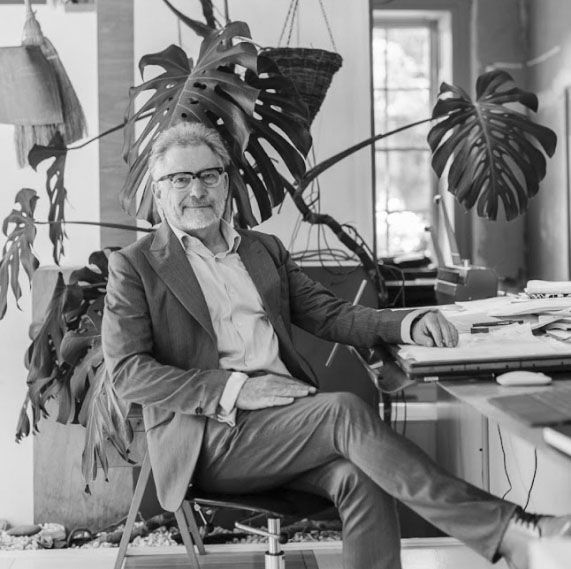
TIMOTHY HILL
Timothy Hill began practicing architecture while a student, combining inadvertent contrasts. The year 1992 involved founding Donovan Hill, his first ‘firm.’ Over a 40 year span he has collaborated to produce houses with memorable outdoor rooms, office buildings with ‘dis-corporate’ ground floors, publicly-permeable research buildings, a State Library with an outdoor terrain in its interior, structured landscapes, bounded gardens, buildings mistakeable for furniture and heritage interventions fusing old and new. This deliberately unspecialised output has been awarded nationally and internationally. In the recent decade, Partners Hill continues designing, researching, advocating, teaching and building on ‘ground.’
Price
Members $49
Non Members $74