Ground Matters: Australasian Student Architecture Congress 2024
On Demand
5 Formal CPD Points
Overview
This bundle offers attendees access to individual talks by Ground Matters 2024 presenters, as well as bonus videos of the presenters in conversation with each other. These bonus conversations are not available for individual Ground Matters On Demand courses.
Offering a dynamic exploration of architecture's engagement with ground and context. These presentations from the Ground Matters Student Architectural Conference feature prominent architects, educators, and practitioners, who aim to foster deep reflections on cultural, ecological, and material sensitivities within architectural practice.
These sessions are also available as individual sessions for 1 Formal CPD point:
Baracco + Wright, Taylor and Hinds
Andrew Steen, Collaboratorio
Kerstin Thompson, Timothy Hill
Sarah Lynn Rees, Eleena Jamil
Further resources are also available from the First Nations Resources Hub, The Institute's dedicated platform for built environment professionals seeking to deepen their understanding and practice of culturally respectful and appropriate design for First Nations peoples
CPD
Learning Outcomes
On completion of this course participants should be able to:
TAYLOR AND HINDS
Reflect on different ways of working within sensitive contexts, both culturally and ecologically
ANDREW STEEN
Discuss the relations building materials have between forming connections to place both historically and into the future.
Explain possible new trajectories of practice stemming from tradition and ideologies based on western philosophies and academic scaffolds.
TIMOTHY HILL
Explain how redescribing sites and manipulating apparent boundaries can result in richer territories and enclosures.
Describe how multiple scales of outdoor rooms are used to create miniature landscapes within Partners Hill’s work.
KERSTIN THOMPSON
Describe defining features of the work of Kerstin Thompson Architects and their intent.
Explain how diverse landscapes have influenced the outcomes of different projects.
SARAH LYN REES
Identify strategies for embedding Indigenous perspectives and stories into architectural projects to create designs that resonate deeply with Country and community
Explain how incorporating geological, ecological, and cultural stories into architectural design provides a more relevant and authentic basis for projects
BARACCO + WRIGHT
Discuss the significance of reusing and removing built forms as part of an architectural approach to environmental repair, applicable across various scales from metropolitan to 1:1.
Identify research, teaching, and practice strategies that promote a renewed relationship with the ground, focusing on sustainability and ecological integration in architectural design.
COLLABORATORIO
Discuss the use of traditional building materials and their benefits to creating more sustainable buildings
Discuss the benefits of working collaboratively with different consultants and organisations during the design and procurement processes.
Describe the use of Luonnonbetoni in Collaboratorio’s work and its benefits.
Articulate ways that architectural practice and design can promote the repair of and support for ecological environments.
ELEENA JAMIL
Understand how natural resources can be utilised within design work to create more sustainable and place-specific outcomes.
Explain how a return to natural craftsmanship can reimagine modern building practices.
NSCA 2021 Performance Criteria
This
course will deliver outcomes related to the following Competencies from the
2021 National Standard of Competency for Architects:
PRACTICE MANAGEMENT AND PROFESSIONAL CONDUCT
PC10 Understand the whole life carbon implications of procurement methods, materials, components and construction systems.
PROJECT INITIATION AND CONCEPTUAL DESIGN
PC17 Have an understanding of Aboriginal and Torres Strait Islander Peoples’ aspirations to care for Country and how these inform architectural design.
PC18 Be able to apply creative imagination, design precedents, research, emergent knowledge and critical evaluation in formulating and refining concept design options, including the exploration of three dimensional form and spatial quality.
PC25 Be able to draw on knowledge from the history and theory of architecture as part of preliminary design research and when developing the conceptual design.
PC26 Be able to undertake site, cultural and contextual analysis as part of preliminary design research.
PC27 Understand how to embed the knowledge, worldviews and perspectives of Aboriginal and Torres Strait Islander Peoples, shared through engagement processes, into the conceptual design in a meaningful, respectful and appropriate way.
PC28 Be able to draw on knowledge from building sciences and technology, environmental sciences and behavioural and social sciences as part of preliminary design research and when developing the conceptual design to optimise the performance of the project.
PC29 Be able to develop and evaluate design options in terms of the heritage, cultural and community values embodied in the site, and in relation to project requirements.
PC30 Be able to explore options for siting a project, including integrating information and analysis of relevant cultural, social and economic factors.
PC31 Be able to identify, analyse and integrate information relevant to environmental sustainability – such as energy and water consumption, resources depletion, waste, embodied carbon and carbon emissions – over the lifecycle of a project.
PC33 Be able to investigate, coordinate and integrate sustainable environmental systems – including water, thermal, lighting and acoustics – into the conceptual design.
Speakers
TAYLOR + HINDS
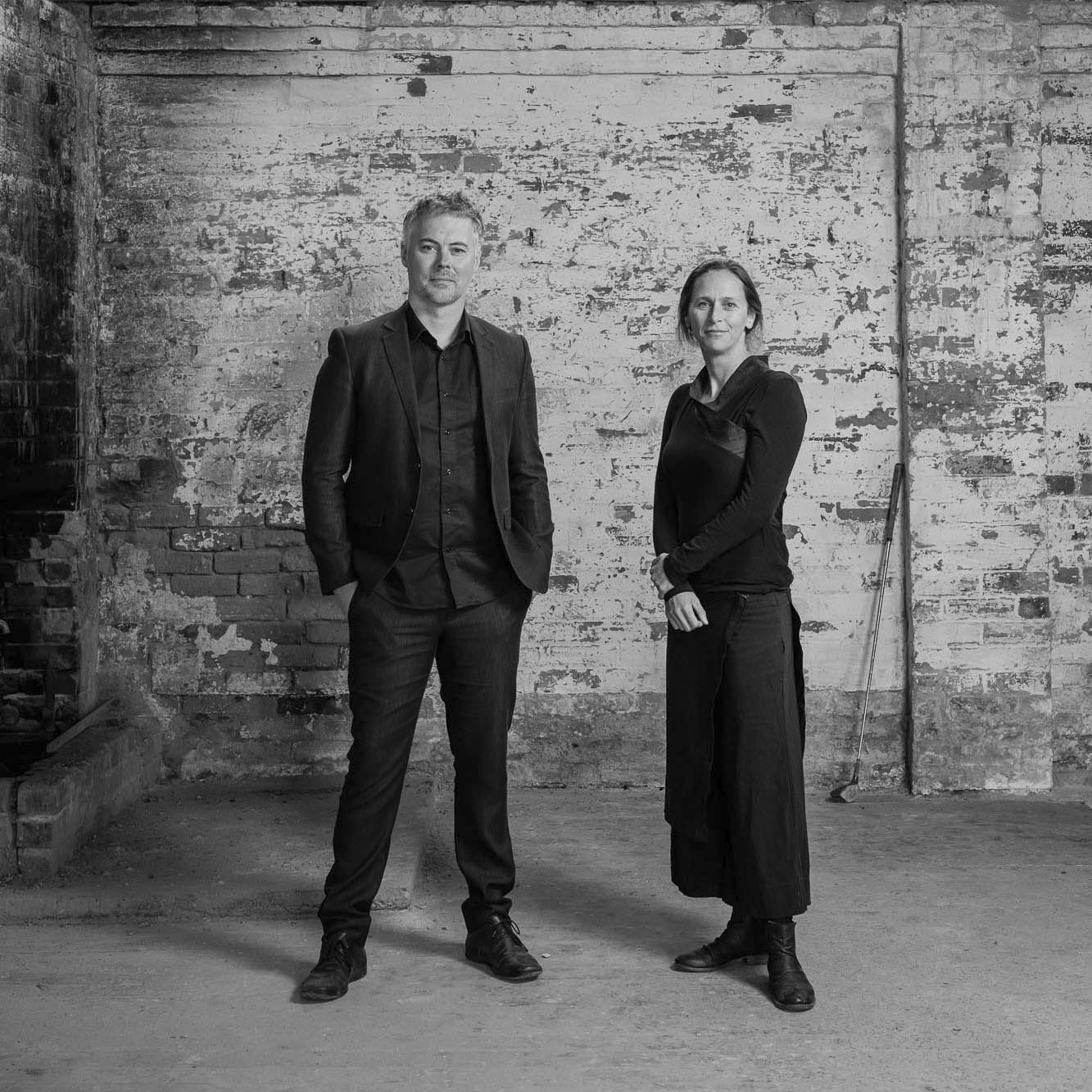
Established by Mat Hinds and Poppy Taylor in lutruwita/Tasmania in 2011, Taylor and Hinds Architects has gained national and international acclaim, especially in the realm of culturalheritage. Their achievements include being shortlisted for the Swiss Architectural Award in 2021 and recently winning the Vogue living ‘On The Ascent’ Architect of the Year (2024). Taylor and Hinds’ work is centered around site-specific connections that are uncovered through rigorous research into the history and culture of lutruwita. Their care and respectful treatment of the ground in projects such as krakani lumi are to be commended. All of Taylor and Hinds’ works are beautifully composed with their attention to detail resulting in Experientially rich environments that improve the quality of the users’ daily lives.
LECTURE TOPIC:

ANDREW STEEN
Dr Andrew Steen is a lecturer at the University of Tasmania School of Architecture and Design and coordinator of the Bachelor of Architecture and Built Environment course. Andrew’s research encompasses theoretical and critical investigations of architectural discourse from semiology and poetics to heritage and place. Andrew Steen is a thoughtful and prolific educator, overseeing multiple design studios that encourage students to think critically about the social, cultural, environmental and poetic impacts their designs may have on the landscape and people that inhabit them. Andrew recently ran a three-tiered studio in conjunction with Taylor + Hinds Architects which saw students travel to Queenstown, lutruwita to critically engage with the ground-scape in order to develop architectural responses.
LECTURE TOPIC:
The lecture interrogates the relation of building materials to the history, present, and future of a place – specifically, bricks and bluestone to Launceston, lutruwita (Tasmania). Conventional perspectives on tradition and ideologies based on western philosophies and academic scaffolds will be interrogated, and new grounds for practice sketched out.
TIMOTHY HILL
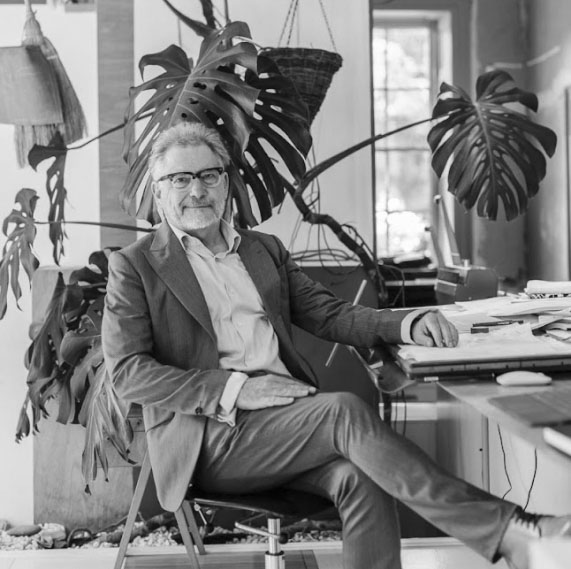
Timothy Hill began practicing architecture while a student, combining inadvertent contrasts. The year 1992 involved founding Donovan Hill, his first ‘firm.’ Over a 40 year span he has collaborated to produce houses with memorable outdoor rooms, office buildings with ‘dis-corporate’ ground floors, publicly-permeable research buildings, a State Library with an outdoor terrain in its interior, structured landscapes, bounded gardens, buildings mistakeable for furniture and heritage interventions fusing old and new. This deliberately unspecialised output has been awarded nationally and internationally. In the recent decade, Partners Hill continues designing, researching, advocating, teaching and building on ‘ground.’
LECTURE TOPIC:
Architecture has a profound ability to evoke powerful responses. It can heighten our awareness of the intrinsic aspects of habitation and the landscape. Creating an appropriate 'ground' for occupation is crucial, reshaping the site's boundaries and topography to enrich the experience and mitigate any surrounding challenges. This approach can include crafting miniaturized landscapes and urban elements, tapping into collective memories and associations. By prioritising emotional resonance, spaces become memorable and enduring, sustaining qualities over time such as light, weather response, and spatial dynamics. Through careful attention to detail, materiality, and spatial relationships, architecture can continuously engage and provoke genuine perceptions and responses.
KERSTIN THOMPSON
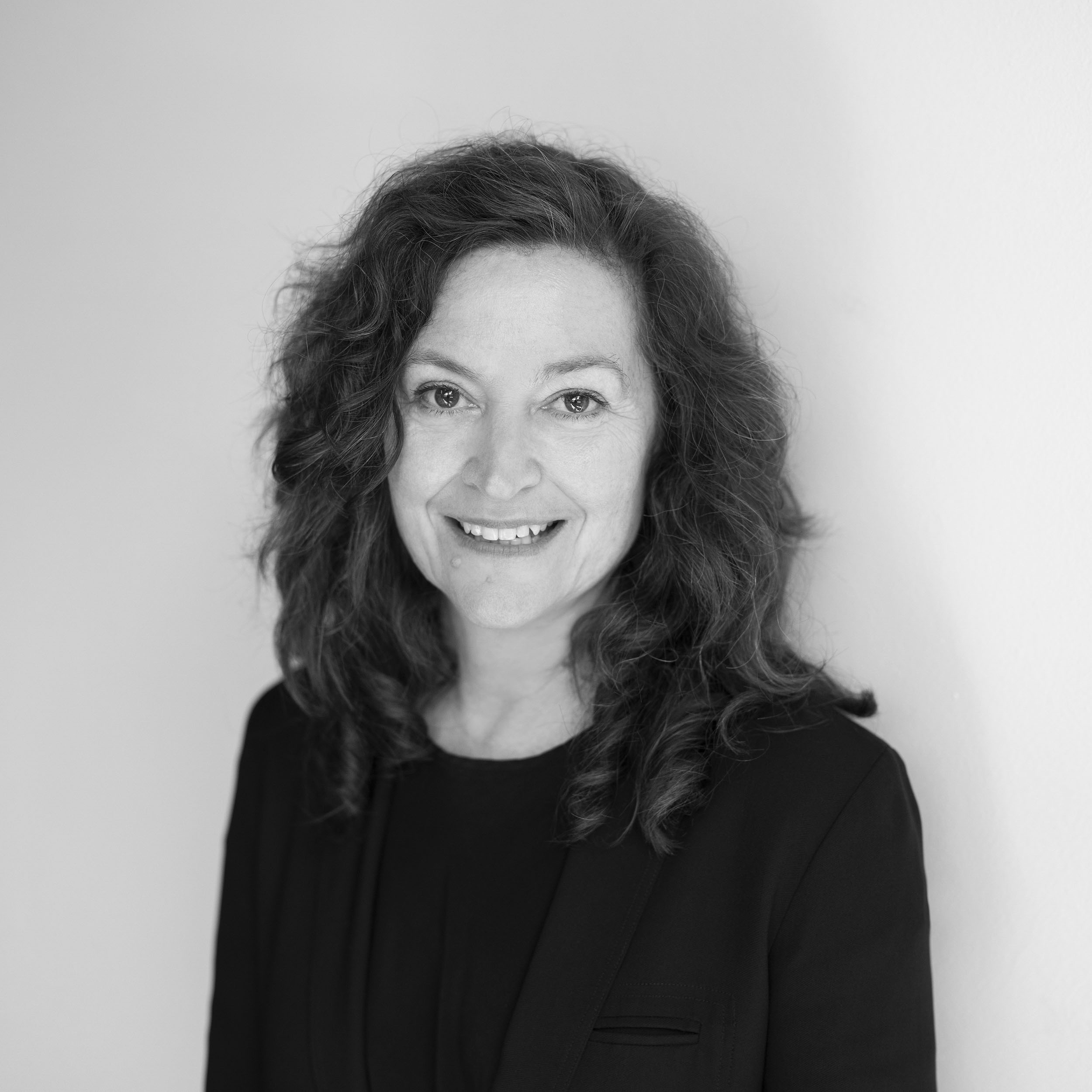
Kerstin Thompson is a principal of Kerstin Thompson Architects and an adjunct professor at RMIT and Monash Universities. With her career spanning over decades, she has contributed generously to the architectural profession and education across Australia and New Zealand through her work as a designer, educator, and speaker and was awarded the Australian Institute
of Architects Gold Medal in 2023. Throughout Kerstin’s work, the ground is used as a source of learning and a catalyst for critical thought to help create her extensive range of award-winning projects. This rigor in engaging with the ground and the landscape results in architecture that is beautiful, functional and sympathetic to its place.
LECTURE TOPIC:
Ground matters have been foundational to KTA’s practice. The ways in which our architecture critically relates to Australia’s diverse landscapes - and to disciplinary, theoretical and historical groundings - will be explored in Kerstin’s reflection upon a number of projects.

SARAH LYNN REES
Sarah Lynn Rees is a Palawa woman, working with Jackson Clements Burrows Architects as a lead indigenous adviser to work collaboratively with communities to ensure that their voices are heard and respected in every project undertaken. She is a lecturer at Monash University and has curated the Blakitecture talks which has provided a prominent platform for important conversations about Indigenizing practice. Sarah’s work, both in practice and within the educational sphere, ensures that indigenous perspectives are listened to and shared in order to design better for both community and for Country. Passionate about shaping the future of the built environment and our profession, Sarah is also the Co-chair of the Australian Institute of Architects First Nations Advisory Working Group.
LECTURE TOPIC:
Nothing is more timeless than Country.
“Neighbourhood character” is a phrase often used to describe the “look and feel of an area” and why this should be preserved. As a design driver however, the term often acts as a device to reproduce watered down versions of colonial architecture. We live in a country that has incredibly deep geological, ecological and cultural stories. These stories form a more relevant and fundamental starting point than the echoing of architectural styles that have, since colonial times, erased the identity of place. It is our job to bring these stories back into view, for and with Country.
Sarah will discuss these ideas through a selection of three projects including Atlantic Fellows for Social Equity at the University of Melbourne, Melbourne Arboretum and Western Sydney University Indigenous Centre of Excellence. These projects represent design of varying scale and typology, from interiors to pavilion to precinct.
BARACCO + WRIGHT
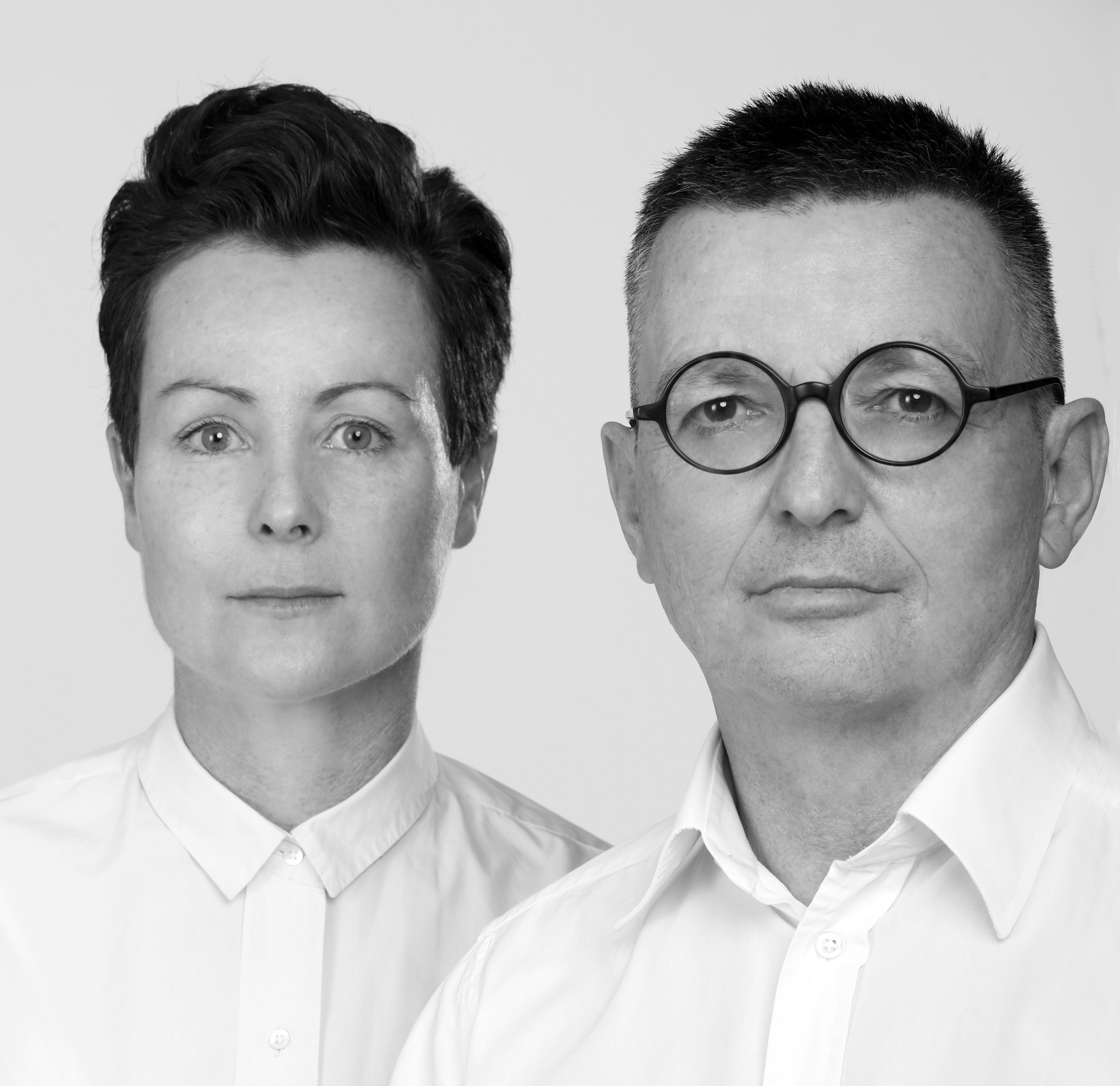
Practicing on Wurundjeri land, Baracco + Wright Architects was established by Louise Wright and Mauro Baracco in 2004. Baracco + Wright apply landscape-based strategies to all their work and use this lens working across multiple disciplines; architecture, academia, urban design and art. Their participation in the 2018 Venice Biennale with ‘Repair’ saw them covering the ground of the Australian pavilion with native endangered plants from southeast Australia, exploring the idea that architecture can play a role in repairing the places it engages with. This sensitive attitude is underpinned in all their works and research including ‘Garden House’,’Rose House’ and the Antennae Spaces and Species issue that they co-edited.
LECTURE TOPIC:
Remaking a relationship with the ground
Research, teaching, speculation and practice approaches of reuse and removal of built form and environmental repair from metropolitan to 1:1 scale.
COLLABORATORIO
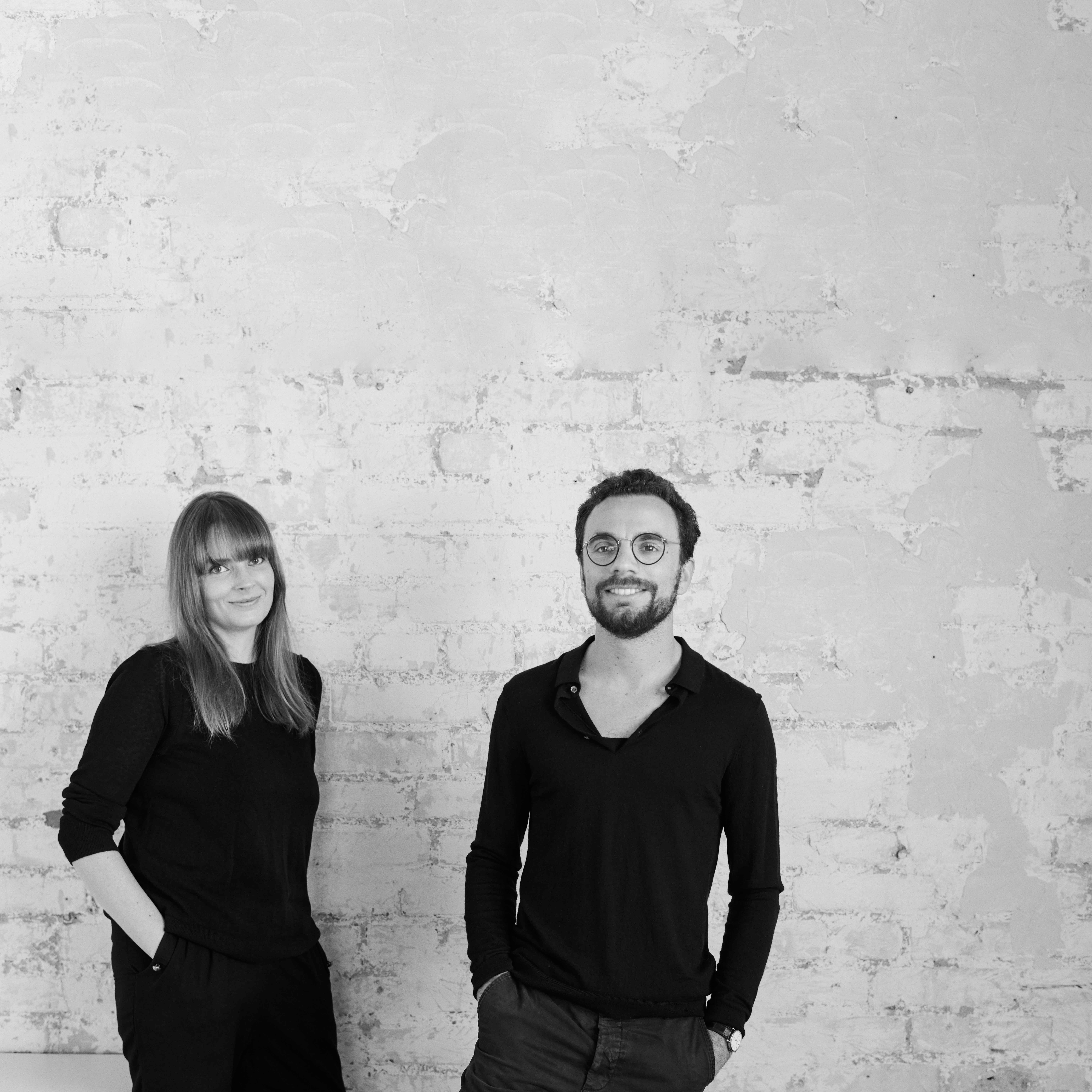
Based in Helsinki, Kristiina Kuusiluoma and Martino De Rossi founded Collaboratorio in 2016 to create an architecture practice that is centered around collaboration. This collaboration exists, not just between the clients, architects and contractors, but between multiple disciplines of knowledge including science and art, depending on the project. Collaboratorio are committed to delivering projects that utilize natural and ecologically positive materials to strengthen the well-being of not only the client, but the natural landscape and thus the ground. Currently undertaking work with Luonnonbetoni, Collaboratorio are part of an endeavor to bring a sustainable concrete alternative, using stone and clay, to the forefront of architectural design. This endeavor is evident in the Villa Koppar project and will be used in more of their projects in the future.
LECTURE TOPIC:
Back to basics: reintroducing traditional building materials to serve contemporary needs.
ELEENA JAMIL
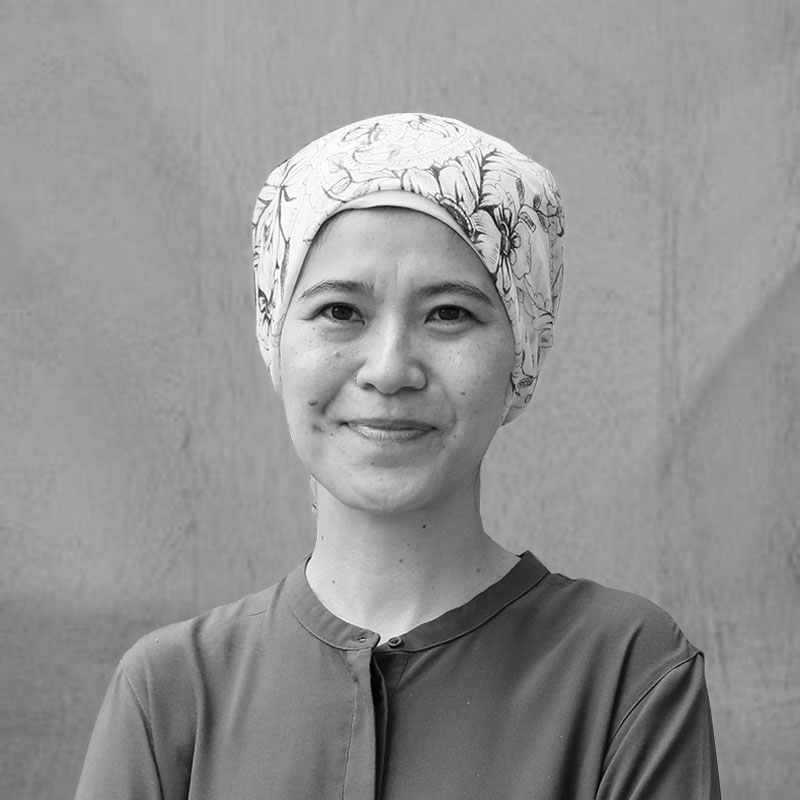
Eleena Jamil set up her practice, Eleena Jamil Architect in 2005, where her projects are underpinned by creating a socially responsible and sustainable response to the brief. Jamil utilizes natural materials and local construction techniques to create place-sensitive and experiential works of architecture that are sustainable, in an environmental, social and economic sense. Eleena Jamil was part of creating About Making, which is a project that interviews artists and architects who utilize traditional crafting techniques and mix these with contemporary hands-on ‘making’ to create their work. Smaller projects such as Bamboo playhouse and Garden library display a playful notion whilst allowing the practice to explore their love of natural materials and hand craftsmanship.
LECTURE TOPIC:
About Making: The cultural continuity and environmental awareness embodied in the architectural-making process, which involves local materials and methods, can offer valuable insights into reimagining modern building practices. A selection of projects presented will demonstrate an engagement with the design and building process and the development of a
deep understanding of natural and human resources rooted in context.
Price
Members $224
Non Members $339
What Do I Do Next?
1. You will receive an automated registration email upon purchase. Follow the link in this email to take you to the course material on our online CPD platform.
2. Accept the T&Cs if it is your first time on the online platform, and hit “my dashboard” to find your purchased course.
3. Undertake your course at your own pace.
4. Once you have completed all the course material, you will be prompted to complete a number of assessment questions, after which your formal CPD certificate will be made available.